

In the current cut-throat financial markets, trading of commodities requires accuracy, understanding, and good instruments. The trading firm of a commodity relies on the correct data, high technology, and strategic resources to make well-educated decisions affecting the portfolios and market posts. It is important to know the market trends and the world factors, whether it is the case with gold, oil, or agricultural products.
The use of advanced commodities trading systems enables traders to process real-time data, discover opportunities, and manage risk. Technology, in conjunction with market understanding, will enable commodities traders to make optimum decisions, react promptly to changes, and attain uniform achievement in an extremely dynamic and competitive trade.
Understanding Commodities Investing
Commodities investing is a business of buying and selling raw materials or major commodities such as metals, sources of energy, and agricultural products. The traders are interested in exploiting price changes, which are usually affected by the economic situation in the world, geopolitical occurrences, and demand and supply forces. In comparison to equities or currencies, commodities may be more volatile, and the availability of real-time information, as well as risk management tools, is essential.
A commodities investing company should have well-equipped technology to monitor macroeconomic factors, seasonal trends, and geopolitical factors that could influence prices. This is expressed by the fact that oil markets are prone to geopolitics and production variations, whereas agricultural goods can vary based on the weather conditions and harvests. The knowledge of these drivers enables traders to predict the market movement and strategize to meet the market.
The Role of Trading Platforms in Commodities Decisions
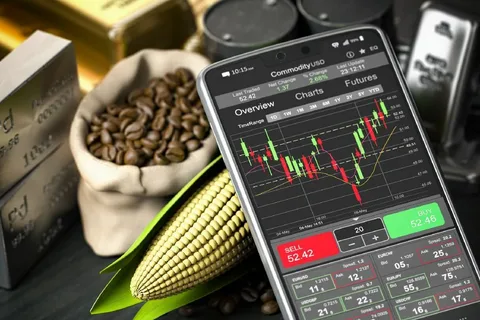
The contemporary trading systems have enabled traders to monitor, evaluate, and take necessary actions on the market data effectively. In the case of commodities, an application that provides real-time price feeds, charting, and the ability to manage risk comes in handy when making a decision. These platforms are usually desktop, web, and mobile-based, so that traders can be in touch with each other at any time and from any location.
The tools have the advantage of allowing a commodities investing firm to track several markets at a time, issue notifications on price changes, and make trades in a fast and accurate manner. Traders are encouraged to make strategic decisions confidently because real-time analytics and historical data charts allow them to determine patterns, assess risk, and make strategic decisions.
Essential Tools for Commodities Trading
Some of the tools that are important in the improvement of commodities trading decisions:
- Real-Time Market Data: Traders can access live prices of metals, energy, and agricultural products to respond to developments in the market.
- Technical Analysis Charts: Charting programs enable traders to study the past price patterns, determine the support and resistance levels, and predict the possible movements.
- Risk Management Features: Stop-loss orders, margin monitoring, and exposure alerts enable traders to manage the possible loss and stick to the disciplined strategies.
- Trading Alerts and Notifications: The traders will not miss important opportunities as timely notifications of price change, economic news, and market news will be delivered.
- Customizable Dashboards: Multiple commodities can be tracked, performance measured, and strategies changed in real time using customizable Dashboards.
Commodities Investing Strategies
Successful trading involves the integration of tools along with clear strategies. Common approaches include:
- Trend Following: This is a technique of analyzing price movement with the aim of determining a new trend and taking a position based on the market trend.
- Hedging: Lessening the sensitivity to price changes by entering opposite positions in allied markets.
- Speculation: Based on the speculation of the expected market event, speculation is a calculated risk that is commonly backed by technical or fundamental analysis.
The commodities trading firm can maximize execution and minimize delays in decision-making by using trading platforms that combine these strategies with real-time insights.
Importance of Education and Research
Along with technical tools, permanent education is very important to the commodities traders. Pricing of commodities is influenced by market trends, regulatory changes, and events taking place all over the world; continuous research and education are a requirement. A lot of companies do offer research reports, webinars, and learning modules to assist traders to improving their market knowledge.
The macroeconomic factors, especially inflation, currency trends, and interest rates, are of great importance to commodities such as oil and gold. The combination of research knowledge and smart trading technology will enable the traders to make well-informed and knowledge-driven decisions.
Leveraging Technology for Enhanced Decisions
The modern commodities investing is based on technology. Professional trading platforms provide co-located access to accounts on all devices, enabling the trader to track the positions on desktop, web, and mobile platforms. Such aspects as an elaborate history of execution, user-configured charts, and market alerts improve the capacity of a commodities investing firm to take decisive action.
Proactive decision-making is also provided with the help of automated trading options, algorithmic signals, and integration with analytical software. The traders can acquire a competitive advantage by adding these technological advantages to market knowledge.
Risk Management in Commodities Investing
Commodities markets are volatile, and therefore, risk management is inevitable. Risk controls should be effective, and these are:
- Stop-Loss Orders: The positions are automatically closed to prevent losses.
- Position Sizing: Size exposure according to account size and market volatility.
- Diversification: An investment that is diversified into different commodities or sectors of the market.
- Margin Monitoring: Since leveraged positions have risky parameters, it is important to make sure that these positions are not in extremely high-risk levels.
The presence of these risk management features on a strong trading platform will help traders to be decisive and, at the same time, safeguard capital.
Conclusion
Successful trading in commodities is more than a sense of intuition, and it needs valuable tools, information derived, and well-trained strategies. A more intelligent decision regarding the commodities trading company could be made with the help of advanced platforms, real-time analytics, and risk management, which would lead to a decrease in volatility and performance improvement. The integration of market research, education, and technical tools will allow the traders to explore the complex market without fear, in which timing, precision, and strategy are the keys to success.
Discover cutting-edge technology and insights with Flow FX, a powerful, intuitive trading platform designed to support commodities investing with real-time data, advanced charts, and risk management tools. With demo accounts, mobile and desktop access, and dedicated support, Flow FX empowers traders to make informed decisions, execute trades efficiently, and optimize market performance across multiple asset classes.