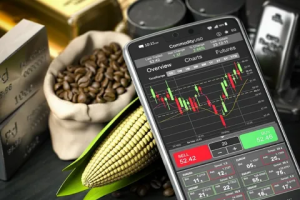



Active traders in the Indian equity market increasingly rely on derivative data to form their daily market views. Among the most studied tools in this space, the Nifty 50 Option Chain offers a comprehensive breakdown of how the market is positioned across every relevant strike price for the flagship index. On the futures side of the market, Bank Nifty Futures provide real-time insight into the directional bias of participants trading the banking segment with leverage. When both of these data sources are studied side by side, a trader gains a far richer understanding of where the market is headed and what forces are likely to influence price behaviour during the session.
The Relationship Between Price Discovery and Derivative Markets
In modern fairness markets, price discovery is not fully visible within the foreign exchange portfolio. An extensive part of the rate-touch play comes from the derivatives segment, where firms, hedge funds, and high-frequency traders field absolutely huge positions based on their macroeconomic views, hedging needs and short-term directional bets.
This means that as long as the pass points are definitely up on the price list, it is usually wired inside the derivatives market. Traders who closely monitor futures and alternative positions are usually already inside the cash department waiting for confirmation. page no longer predicts, however, in reading, to be had evidence more extensive than the typical participant.
Understanding how derivatives drive interest rate discovery is a motivation to build additional analysis of option chains and futures data. Without this context, the figures stand as a summary. This makes each point of information part of a coherent story, which is often what the market is going into and why.
How Futures Premiums Signal Market Conviction
Futures trade at a premium or discount to the spot price, depending on the prevailing market sentiment and the cost of carry. Under normal conditions, futures should trade at a slight premium to spot due to financing costs. When futures trade at an unusually high premium, it reflects excessive bullishness. When they trade at a discount, it suggests fear or bearish positioning.
These deviations from fair value are important signals. A sharp rise in futures premium without a corresponding move in the spot price often precedes a catch-up rally in the cash segment. Conversely, when futures trade persistently below spot, it can indicate that large participants are hedging their cash positions by shorting futures, which is itself a bearish signal about near-term expectations.
Traders who track the futures basis, that is the difference between futures and spot prices, can use this information to anticipate directional moves before they fully materialise in the cash market. This is one of the more reliable leading indicators available to a disciplined market observer.
Decoding Call and Put Walls in the Option Chain
The term walls refer to the concentration of open interest at specific strikes in the option chain. A call wall is formed when a very large number of call contracts have been written at a particular strike. A put wall forms in the same way on the downside.
These walls exert gravitational influence on price. When the market approaches a call wall, selling pressure from option writers tends to slow the advance. When it approaches a put wall, buying activity from put writers defending their positions tends to create support. Markets very often oscillate between the two walls, particularly in the middle of a trading week when there is no strong external catalyst to break the range.
Identifying these walls at the start of each trading day takes no more than a few minutes but pays significant dividends throughout the session. A trader who knows the effective upper and lower boundaries for the day can plan range-bound strategies accordingly or wait patiently for a confirmed break before committing to a directional position.
Role of Delivery Data in Confirming Futures Moves
One of the underappreciated aspects of Indian market analysis is the role of delivery-based trading data in confirming moves seen in the futures segment. When futures roll over from one expiry to the next with an increase in overall open interest, it suggests that participants are adding fresh positions rather than simply rolling existing ones. This is a sign of conviction and often precedes a sustained directional move.
Delivery data from the cash segment, when compared with futures open interest trends, can either confirm or contradict the message being sent by derivatives positioning. A rise in futures open interest accompanied by strong delivery buying in cash market heavyweights is a powerful combination that increases the reliability of a bullish thesis. The opposite combination, rising futures OI with declining deliveries, can signal that the rally is being driven primarily by speculative positioning rather than genuine investment demand.
Applying These Tools to a Structured Trading Plan
The fees for any analytical tool have long been determined with the help of how consistently and systematically it is performed. Derivative statistics, option chaining, and futures placement are most effective when incorporated into a routine based instead of an advice-based approach.
A practical approach involves setting up a pre-market ritual that includes reviewing the futures top rate, identifying significant commodity OI splits in the option chain, checking PCR for any additional readings, and forming outlooks on all likely trading variances. This sequential process revolves around following the facts, statistics, and the byproduct.