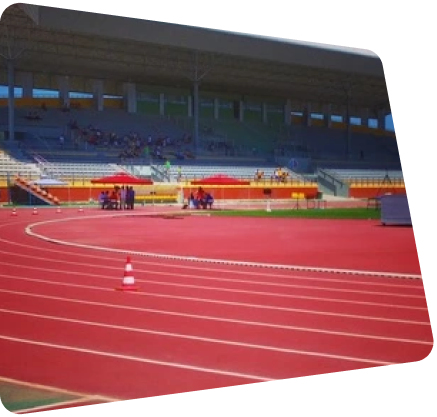
Across Riyadh’s expanding sports infrastructure, track construction demands precision at every stage. Heat is relentless. Dust settles fast. Usage is continuous. These factors shape how surfaces are selected, installed, alongside maintained over time.
Within this ecosystem, running track flooring material producers in Riyadh supply systems tailored to local stress conditions, influencing not just raw material quality but also installation outcomes plus long-term performance. Their role extends into engineering decisions, not just supply chains.
Material Engineering for High-Performance Tracks
At the core of every track lies its material system. Polyurethane dominates. Not by chance. It offers elasticity, controlled energy return, along with resistance to cracking under thermal stress. Athletes depend on this consistency.
Under Riyadh’s climate pressure, formulations require more than flexibility. UV stabilizers, abrasion resistance, plus chemical bonding strength all come into play. Without these, surfaces degrade quickly. Performance drops. Maintenance costs rise.
Short lifespan surfaces fail fast. With advanced layering techniques, manufacturers integrate binders alongside rubber granules to create surfaces that absorb impact yet retain structural integrity. This balance is not optional. It defines usability.
Surface Layer Composition
On the topmost layer, texture dictates interaction. Grip matters. Too smooth, it slips. Too coarse, it slows movement. The balance must be exact.
Through calibrated granule distribution, the surface achieves traction without compromising comfort. Installation teams apply this layer carefully, ensuring uniform spread plus curing consistency across all lanes.
Base Layer Stability
Beneath the visible surface, structure holds everything together. A weak base guarantees failure. No exceptions.
Typically, asphalt or concrete bases are prepared with precise grading. Load distribution becomes predictable. Cracking risks reduce significantly when compaction standards are met.
Installation Precision and Site Preparation
Before materials arrive, groundwork defines outcomes. Soil condition matters. Moisture levels matter more. Slight errors at this stage amplify later.
During installation, each layer must meet thickness tolerances. Not approximately. Exactly. Deviations affect shock absorption alongside surface response.
Even lane markings require technical accuracy. Using calibrated equipment, installers ensure alignment, spacing, along with finishing quality. These details influence certification eligibility, especially for competitive facilities.
Layer Bonding Techniques
Between layers, adhesion strength determines longevity. Weak bonding leads to delamination. That means early failure. Chemical binders combined with controlled curing processes create seamless integration between base and surface layers. Temperature control during application becomes critical in Riyadh conditions.
Drainage Integration
Water management is often overlooked. It should not be. Proper drainage channels prevent accumulation beneath the track. Without this, moisture compromises structural integrity over time, even in dry climates where occasional rainfall still matters.
Climate Considerations in Riyadh
In high-heat environments, expansion becomes unavoidable. Materials react. They move. Engineering must account for this behavior.
Flexible compounds absorb thermal shifts without cracking. Rigid systems fail under such conditions. This is not theoretical. It is observed repeatedly across poorly designed installations.
Dust adds another layer of complexity. Fine particles settle into surface pores, affecting traction alongside aesthetics. Coatings must resist this accumulation while allowing easy cleaning without damaging the surface.
UV Resistance Technologies
Under constant sun exposure, degradation accelerates. Surfaces fade. Polymers weaken. Performance declines.
UV-resistant additives protect against this breakdown. At a molecular level, they stabilize the material, maintaining both appearance and functionality over extended periods.
Thermal Expansion Control
Temperature swings, even within a single day, stress the material structure. Expansion during heat. Contraction at night. Repetition leads to fatigue.
Engineered elasticity counters this effect. Materials return to original form without structural compromise. This ensures consistent performance throughout the year.
Quality Standards and Compliance
Every track must meet defined benchmarks. Thickness. Shock absorption. Friction. These are not optional metrics.
International standards dictate these parameters. Compliance ensures safety alongside usability for professional and training environments.
Testing validates everything. From energy return measurements to wear resistance checks, each parameter undergoes evaluation before certification is granted. This process filters out substandard construction.
Performance Testing Metrics
Laboratory testing simulates real usage. Load cycles. Environmental exposure. Surface wear. These tests provide measurable insights into durability, ensuring that tracks perform consistently under repeated stress conditions without unexpected degradation.
Integration of Technology in Track Systems
Modern installations rely on more than manual expertise. Technology assists. Precision increases. Digital leveling tools ensure base accuracy. Laser-guided systems improve alignment. Data tracking tools monitor performance over time, enabling proactive maintenance decisions.
But is technology alone enough? Without skilled execution, even advanced tools fail to deliver expected results. Expertise remains central. Always.
Smart Maintenance Approaches
Rather than reactive repairs, facilities now adopt scheduled maintenance. Inspection routines identify early-stage issues.
Surface cleaning, minor patchwork, alongside performance checks extend track lifespan significantly, reducing long-term expenditure while maintaining consistent usability.
Understanding the Role of Local Producers
Within Riyadh’s construction ecosystem, local producers influence more than supply availability. They shape specifications. They guide project planning. By offering materials engineered for regional conditions, they reduce dependency on imported systems that may not align with local climate demands. This improves reliability.
Consistency comes from proximity. Faster delivery timelines, technical support, along with adaptability to project-specific requirements make local production a practical advantage for large-scale developments.
Final Thoughts
Across Riyadh’s sports infrastructure projects, execution quality determines long-term value. Material selection sets the foundation. Installation precision defines performance. Environmental adaptation ensures durability. CYPEX GROUP operates within this space as a specialized provider of polyurethane sports flooring systems, delivering solutions aligned with demanding climatic conditions alongside international standards. With capabilities covering material engineering, installation processes, plus compliance-focused execution, the company supports projects requiring dependable outcomes. For facilities seeking a reliable running track installation factory in Riyadh, CYPEX GROUP provides structured, technically sound solutions built for sustained performance.
